
How Milena Boudinova uses QandR for co-creation and meaningful dialogue
Making insights visible


In co-creation and reflection sessions, you want everyone to join in. Not just the people who speak up first or loudest, but also the quieter voices in the room. With QandR, everyone can share their thoughts at the same time using their phone or tablet. The responses pop up instantly on the screen, so you quickly get a feel for what’s going on—and can take the conversation deeper straight away.
That’s exactly why social artist, researcher and art educator Milena Boudinova loves using QandR in her work. She brings groups together around imagination, collaboration and reflection, and uses QandR to keep those processes flowing—and make them more meaningful.
During her creative and educational sessions—including a co-creation session for an art project at an MBO college, an input session with viewers for broadcaster HUMAN, and a student gathering during the Experience Week of Rotterdam University of Applied Sciences—she collected hundreds of individual responses. Thanks to QandR, that input didn’t remain as scattered comments or fragmented notes; instead, everything was clearly organized and immediately fed back to the group in visual form.
By showing responses right away, participants can see themselves in what’s shared and feel more ownership, while I still steer the session as the facilitator.
Milena’s QandR sessions: an impression
Challenge:
Gaining insight into what lives within a group, without losing the richness and nuance of individual experiences
Method:
Interactive QandR sessions using multiple question types, enabling dozens of participants to contribute hundreds of responses that were visualised instantly
Participants:
Dozens of participants per session, across multiple projects






Sessions with QandR are highly appreciated by participants — even among young people, I’ve noticed. For them, expressing themselves via their phone feels completely natural; the spontaneity and anonymity remove barriers, making it easier to address even the most difficult or sensitive topics. Once the word cloud with shared responses appears on the screen, an authentic conversation can naturally begin.
From individual responses to a shared picture
Participants were invited to respond to questions about experience, collaboration and future perspectives. By combining ratings, open-word input and visual overviews, QandR quickly revealed:
- what was widely shared within the group
- where perspectives differed
- which themes resonated most
For Milena, the power of QandR lies in how easy it is to collect meaningful individual responses that together form a shared picture. The visual output — like word clouds and moodboards made from uploaded photos — isn’t the final conclusion, but a starting point for conversation and deeper discussion.
By involving participants in this way, they feel like they’re genuinely being heard.
QandR as an extension of the creative process — without steering
QandR fits seamlessly with Milena’s way of working:
What I see happening is that participants gradually start to enjoy the session — it becomes a kind of game. That’s important to me, because I work a lot with young people. The variety of formats allows me to switch effortlessly between pace and intensity. This keeps participants engaged and involved.
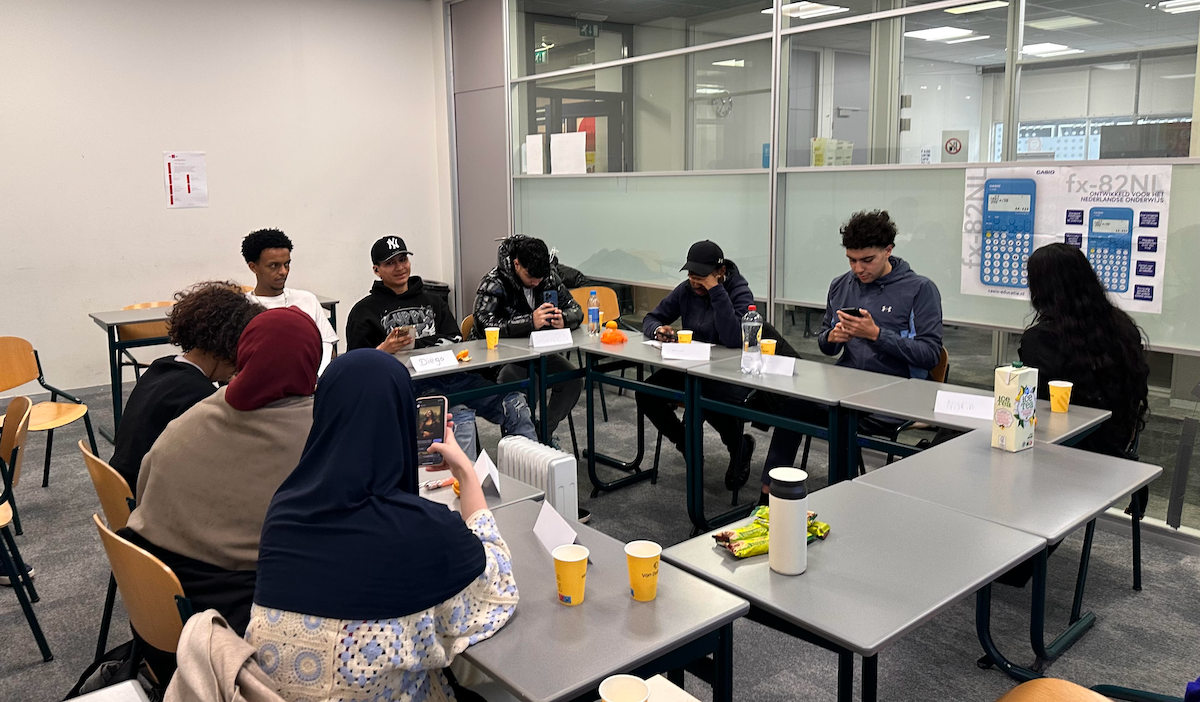
These sessions show that QandR does more than simply collect input. It helps groups reflect together, shape ideas, and truly get the conversation going. Milena also regularly uses the anonymous results from sessions for evaluations with partners and for measuring impact.
Another thing I really value is that all my sessions are saved within the QandR environment and I can always return to them. This allows me to further develop my practice and build on the methodology.
Milena Boudinova – Social artist and art educator
Want to take QandR for a spin?
Curious to see what this could look like for your own sessions? In a free demo, we’ll walk you through how a session works using a live screen share, and show you how easy it is to set up a project. Want to jump right in? Just request a facilitator account and explore it at your own pace.